Deliver high-performance surfaces for advanced Antenna applications
Analyse and optimise periodic and quasi-periodic surfaces without additional custom tools.
Periodic and quasi-periodic surface design is complex
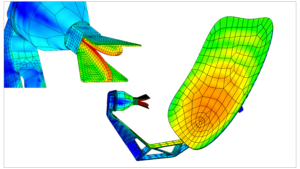
When designing periodic or quasi-periodic surfaces for satellite antennas, 5G/6G communication systems and radar systems, you balance beam efficiency, cross-polarization and sidelobe control. Thermal deformations, mechanical issues and manufacturing tolerances add further complexity. Accurate electromagnetic analysis is essential. It determines whether your design meets mission requirements.
TICRA is the only commercial specialist in periodic and quasi-periodic surface design and analysis, giving you the tools to succeed.
We offer the only commercially available solutions for these challenges
Technical capabilities that drive results
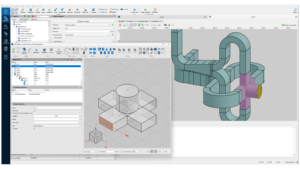
Periodic unit cell analysis and optimisation - Design and analyse periodic unit cells to achieve target performance based on element scattering parameters.
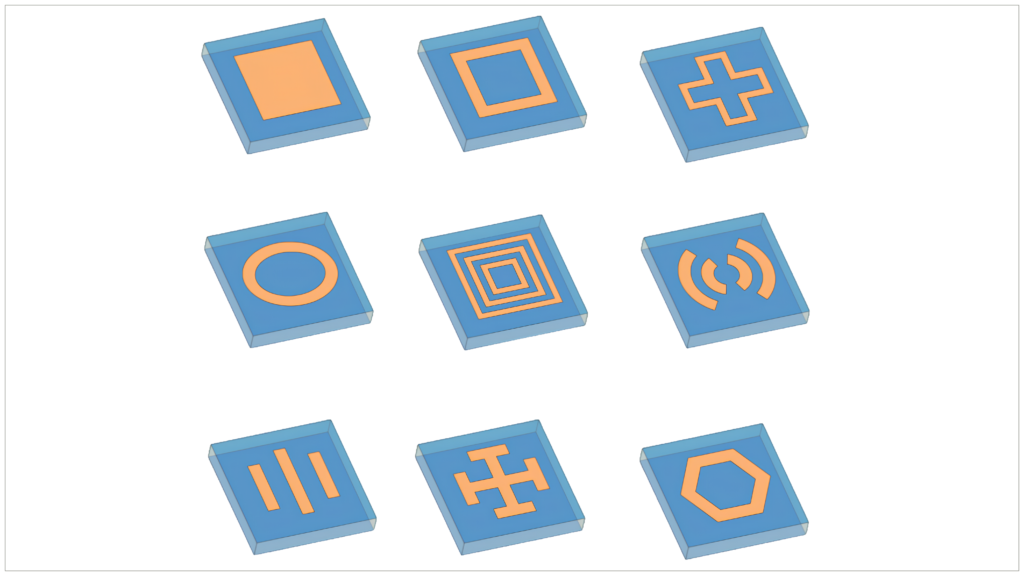
Extensive periodic geometry library - Access a large collection of pre-defined periodic unit cell elements for rapid configuration.
Scattering matrix database - Leverage pre-computed scattering data for extremely fast subsequent analyses and optimisations.
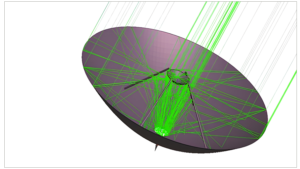
Method of moments and Physical Optics solvers – Analyse electrically-large periodic and quasi-periodic surfaces with advanced PMoM-PO hybrid methods.
Large-scale direct optimisation – Optimise periodic and quasi-periodic surfaces with hundreds of thousands of elements in seconds.
Verification against measurements – Validate designs with high accuracy. Algorithms verified against full-wave methods and measured data.
Industries relying on periodic and quasi-periodic surfaces

Satellite Communications
Reflectarray and transmitarray antennas using quasi-periodic designs provide high-gain, low-profile deployable solutions for SATCOM ground terminals on ships, aircraft and vehicles.
Telecommunications
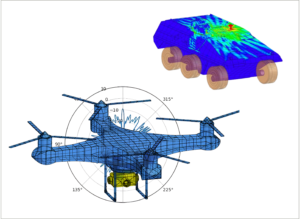
Reflectarray and transmitarray antennas based on quasi-periodic designs are expanding 5G and 6G infrastructure, enabling high-frequency, high-capacity wireless connections globally.
Science
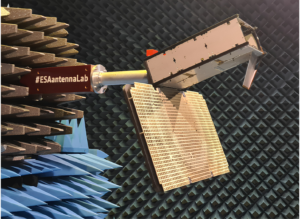
High-precision reflectarray antennas enable compact Earth observation satellites and deep-space missions. Frequency-selective surfaces support radio telescopes for beam control and signal detection.

Take the next step on your periodic and quasi-periodic surface journey
Get hands-on with TICRA’s periodic and quasi-periodic surface tools through a free trial. Or if you want to discuss your project first, our engineers are ready to help.
Some frequently asked questions
Periodic surfaces use identical repeating elements across the entire structure. Quasi-periodic surfaces vary the element properties across the surface to achieve specific performance goals.
Both enable advanced electromagnetic control, and TICRA is the only commercial tool that designs and analyses both seamlessly.
TICRA tools support single and multi-layer structures, shaped surfaces, offset geometries, and both planar and curved configurations. The extensive geometry library includes canonical elements, tabulated data and surface distortions for accurate real-world representation.
Periodic and quasi-periodic surfaces manipulate electromagnetic waves through repeating element patterns, enabling high-performance solutions in compact, potentially deployable packages.
They excel where traditional designs cannot match the beam efficiency, multi-band operation or low radar signature requirements.
Yes. TICRA tools model surface distortions, element misalignments and manufacturing tolerances directly in electromagnetic analysis. You can assess performance impact and optimise designs to maintain requirements despite real-world imperfections.
TICRA employs Periodic Method of Moments solvers for accurate unit cell analysis and a hybrid PMoM–Physical Optics approach for electrically-large surfaces.
Each method is applied appropriately based on problem size and geometry.
TICRA tools are validated across numerous space, defence and science programmes. Correlation studies show excellent agreement between predictions and measured radiation patterns and performance metrics.
Large-scale direct optimisation of quasi-periodic surfaces with hundreds of thousands of elements typically completes in seconds, enabling rapid design iteration and exploration compared to general-purpose solvers.