

Design decisions ripple through the system

As an engineer designing feed horns, waveguide devices and assemblies, you weigh polarisation and mode purity against, sidelobe control and network parameters against design variables. Component-level results rarely predict installed behaviour, since electromagnetic interactions with the antenna and surrounding structures shape final performance. 

TICRA has supported feed and waveguide designs for decades, trusted across space, defence and research programmes. 

Technical capabilities that drive results

  • Dedicated geometry wizards - Set up corrugated horns, smooth-wall horns and rotationally symmetric feeds using guided 2D editors.
  • Extensive component library - Build feed and waveguide assemblies from predefined components or construct custom geometries from scratch.
  • Multiple high-performance solvers - Apply mode matching, higher-order BoR-MoM, 3D MoM or FEM, selected automatically per component.
  • Direct optimisation on patterns - Optimise against scattering parameters and primary or secondary radiation pattern goals directly.
  • Integration across TICRA Tools - Extend feed analysis into reflector, array and installation models within a connected workflow.

We offer the only commercially available solutions for these challenges


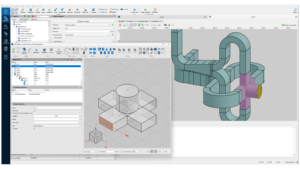
Champ 3d in the new CAD interface

CHAMP 3D

Feed and waveguide design

Analyse and optimise feed horns, waveguide junctions and complete feed chains within one environment.
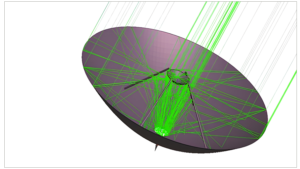


grasp Scattering-between-multiple-objects

GRASP

Reflector and system integration

Extend feed analysis to reflector interactions for complete antenna system performance.
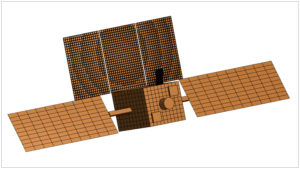
 

QUPES

QUPES

Reflectarray and array design

Combine feed models with quasi-periodic surfaces to evaluate reflectarray and transmitarray performance.
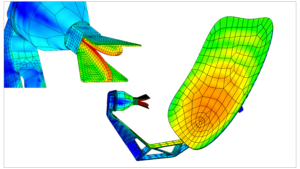
 

ESTEEAM

ESTEAM

Installation and platform effects

Account for platform and installation effects on feed and antenna performance.
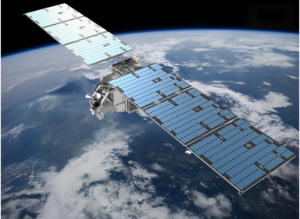
 

Industries relying on Feeds and Waveguide devices


Satellite image

Satellite Communication

Feed systems need high aperture efficiency and strong polarisation purity, since losses here directly limit link performance and spectrum utilisation.
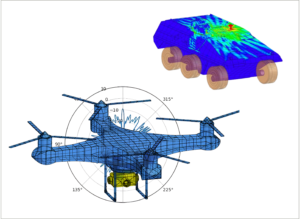
 

Defence and radar

Radar and tracking systems rely on feed chains that stay predictable, because electronic warfare and defence operations leave no margin for uncertainty.

 

Telecommunications

High-frequency feed architectures support microwave backhaul and millimetre-wave links, as bandwidth demands from emerging 5G and 6G infrastructure continue to grow.
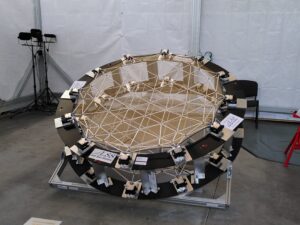


Large Space Reflector demonstrator with a segmented reflective surface supported by a geometric frame and multiple adjustment mechanisms around the perimeter.

Earth observation and science

Earth observation payloads and radio telescopes depend on low-loss feed systems, because measurement accuracy hinges on stable electromagnetic characteristics over time.
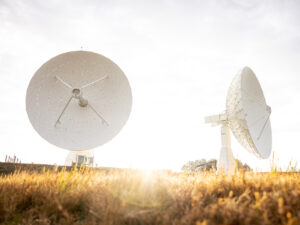


VIASAT X TICRA : image of two antennas

Ground segment

Ground station feeds must maximise G/T and EIRP while minimising interference, so links with satellites and other space assets stay reliable.
Take the next step on your feed and waveguide design journey

Get hands-on with TICRA's feed and waveguide tools through a free trial. Or if you want to discuss your project first, our engineers are right here.

Speak to an expert

Start your free trial

Some frequently asked questions

X

How can we help you?

  • This field is for validation purposes and should be left unchanged.
  • This field is hidden when viewing the form
  • Your contact information may be sent to a TICRA sales representative.