Design Optimal Coverage Plans for Mission-Critical Satellite Systems
Translate coverage requirements into optimised antenna designs that meet mission objectives.
Balancing coverage and antenna constraints demands precision
As a satellite system engineer planning coverage for your constellation, you are balancing coverage objectives with antenna constraints and regulatory requirements. Early coverage decisions shape antenna design. Late changes become costly. Accurate coverage analysis directly affects whether your system meets capacity and performance targets in orbit.
TICRA has supported satellite antenna development for over 50 years, earning the trust of space agencies, defence contractors and research institutions worldwide.
We offer the only commercially available solutions for these challenges

SATSOFT
Coverage and beam design
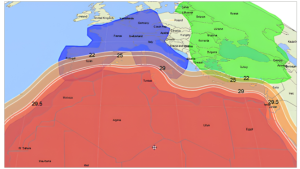
Assess antenna coverage and gain across your constellation. Evaluate key performance parameters to inform antenna design decisions for optimal payload performance.
POS
Shaped-reflector optimisation
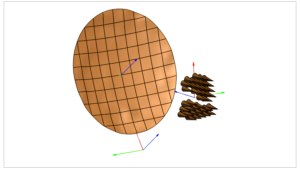
Optimise shaped- and multifeed-reflector designs to meet spot-beam and contour-beam coverage layouts whilst controlling sidelobe performance.
Technical capabilities that drive results
- Quick coverage statistics - Assess key parameters rapidly with built-in statistical performance analysis on defined coverage patterns.
- Payload antenna planner - Run initial optimisations on commonly used satcom antennas whilst designing required coverage layouts.
- SATSOFT and TICRA integration - Export initial antenna designs and/or optimisation goals from SATSOFT for optimisation in TICRA tools, then import final radiation patterns for verification.
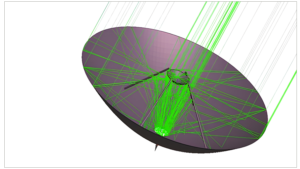
- High-performance electromagnetic solvers - Analyse electrically-large reflector systems in seconds with advanced Physical Optics solvers.
- Powerful optimisation algorithms - Optimise reflector geometries, feed positions, surface shaping and array beamforming simultaneously within unified workflows.
Industries relying on accurate coverage planning and precise antenna modelling

Satellite Communication
Satcom operators optimise coverage and throughput across constellations to compete in global markets. Coverage planning impacts capacity, margins and service quality.
Telecommunications (5G/6G)
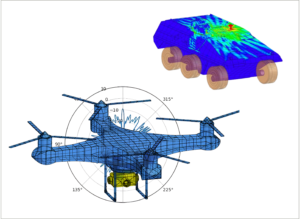
5G/6G non-terrestrial networks optimise coverage planning to deliver consistent performance across geographic regions. Coverage analysis ensures capacity and reliability meet growing demand.
Science
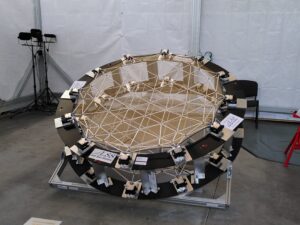
Earth observation and radio astronomy missions depend on precise antenna footprints and performance predictions for data collection and signal detection. Optimised patterns enable scientific discovery.
Ground segment
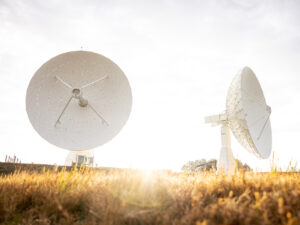
Ground stations require reliable coverage planning for satellite tracking, telemetry and command operations. Optimised coverage ensures stable links across global networks

Are you ready to optimise your coverage design?
Explore TICRA’s coverage-planning software through a free trial. Or if you want to discuss your specific challenges first, our engineers and technical support team are ready to help.
Some frequently asked questions
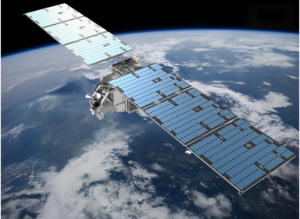
SATSOFT models single and multi-satellite constellations, including LEO, MEO and GEO orbits. Coverage analysis accounts for satellite orientation and antenna pointing constraints across mission lifecycles.
Coverage requirements export directly into antenna design workflows. Engineers refine antenna geometries and array configurations based on coverage objectives, then import final radiation patterns back for verification.
Yes. TICRA tools analyse coverage performance across entire constellations to optimise system-level capacity and throughput.
Engineers evaluate trade-offs between individual satellite design and constellation performance, accelerating early design decisions and revealing which constellation configurations meet mission objectives most effectively.
TICRA tools are validated against measured data across numerous space and commercial programmes. Correlation studies show excellent agreement between predicted coverage footprints and actual on-orbit performance.
TICRA tools verify compliance with frequency coordination, interference limits and coverage requirements. Engineers assess whether designs meet regulatory obligations before filing.
Runtime depends on constellation size and analysis complexity. TICRA's high-performance solvers enable rapid coverage assessment, allowing engineers to evaluate multiple design trade-offs quickly during concept and design phases.
Most constellation analyses complete in minutes rather than hours, enabling iterative design exploration.