Develop High-Performance Phased Arrays with Full-Wave Precision
Analyse phased arrays with precision. From element design to installed system performance.
Getting phased arrays right takes rigorous analysis
As an engineer designing phased arrays for satellite communications, radar or 5G systems, you are balancing beam-steering performance against pattern characteristics. Mutual coupling between elements and platform interactions add complexity that approximations cannot capture.
Getting the electromagnetic analysis right directly affects whether your array antenna meets its performance requirements in the field.
TICRA’s phased-array software supports the full design analysis and beamforming workflow for modern phased-array systems within a single dedicated environment.
We have the solutions for your phased array antenna challenges

ARRAY
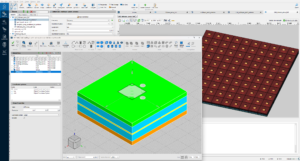
Phased Array analysis and optimisation
Analyse finite array effects with full-wave solvers for rapid performance prediction.
POS
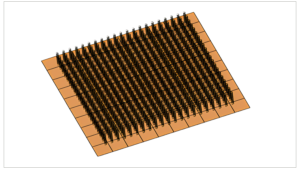
Array and reflector optimisation
Optimise array weights, spacing and reflector shapes to achieve the beam patterns you need without running separate analyses.
UQ
Uncertainty quantification
Evaluate how excitation errors and manufacturing tolerances affect array performance.
Technical capabilities that drive results
- Array wizards - Quickly build array models, with predefined elements and interactive layout tools.
- Full scattering matrix analysis - Compute element interactions across all array elements without approximation.
- Coupled excitation optimisation - Optimise excitation and geometry, while accounting for mutual coupling effects.
- Rapid element modelling - Design and analyse array elements using parameterised CAD models in stand-alone or inifinite-array configuration.
- Platform integration analysis - Predict antenna performance on real platforms across vehicles, aircraft and satellites.
- Uncertainty quantification workflows - Assess how design tolerances and excitation variations impact array gain and beam patterns.
Industries relying on phased-array antennas
-
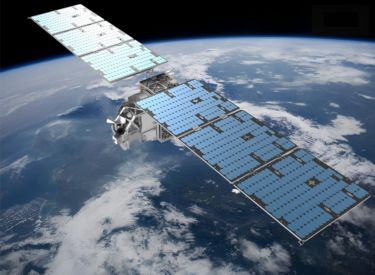
Satellite communications
Phased arrays enable high-gain, electronically steerable links for satellite constellations and ground terminals, supporting global connectivity and rapid network deployment. -
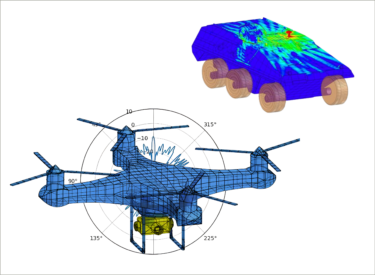
Defence
Advanced radar and communication systems depend on phased arrays for mission-critical applications requiring high performance, beam agility and precise target tracking. -
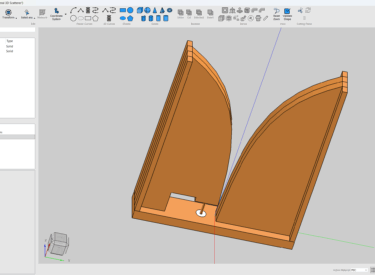
Telecommunications (5G/6G)
Array antennas enable adaptive beamforming, higher capacity and spectral efficiency essential for next-generation wireless networks and wide-area coverage. -
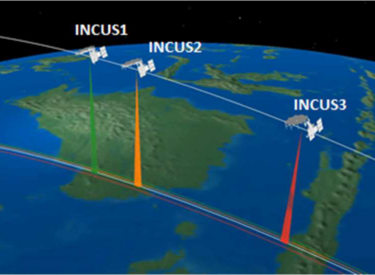
Earth observation
Earth observation satellites rely on phased arrays for high-resolution imaging and wide-area coverage, requiring consistent performance across extended orbital lifetimes. -
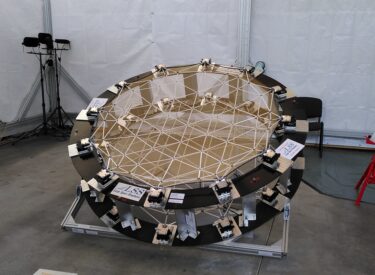
Science (radio astronomy)
Radio telescopes and deep-space missions use phased arrays for signal collection and beam steering, where sidelobe suppression enables detection of faint astronomical sources. -
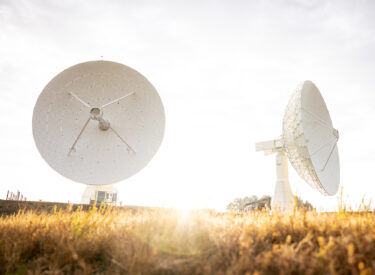
Ground segment
Ground stations and mobile terminals depend on phased arrays for satellite tracking and low-latency communication, enabling SATCOM-on-the-move without mechanical steering.
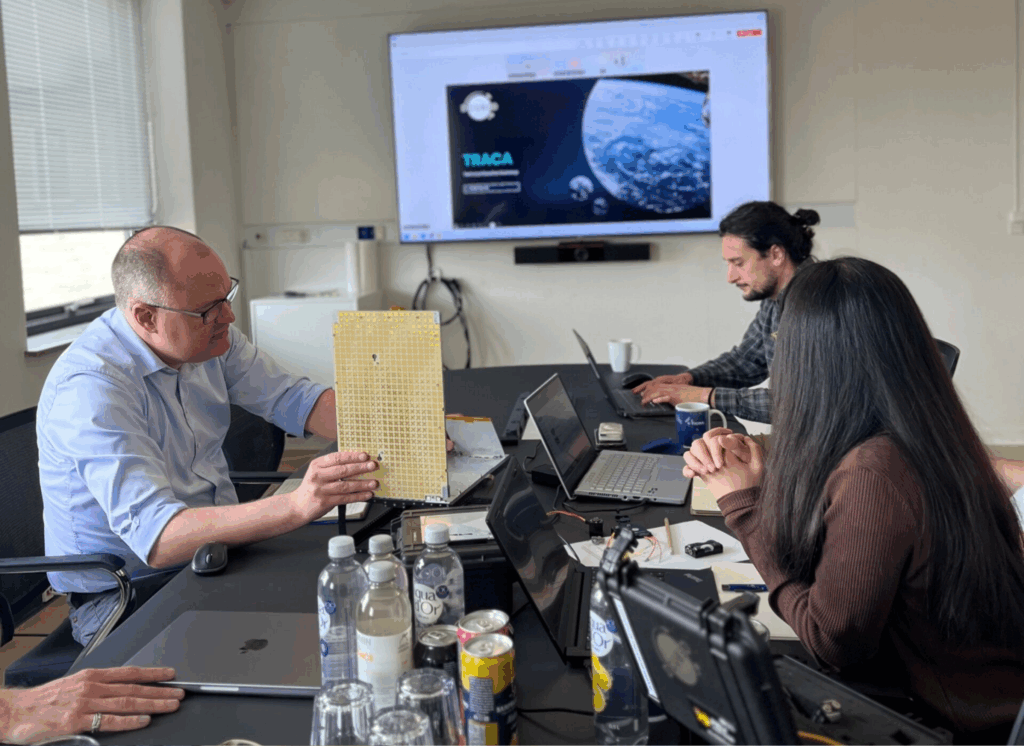
Take the next step with phased array software
Explore TICRA’s phased-array software through a free trial.
Or if you want to discuss your specific challenges first, our engineers and technical support team are ready to help.
Some frequently asked questions
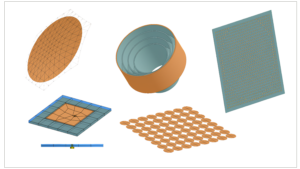
TICRA tools support uniform and sparse arrays with planar and cylindrical geometries. Element libraries include dipoles, patches, horns and custom radiating elements. You can also import CAD models of your own element designs for analysis and optimisation
TICRA's solvers compute the full scattering matrix, capturing mutual coupling effects between every array element without approximation.
Yes. TICRA's optimisation engine exploits knowledge of the full scattering matrix to adjust element weights, phases and spacing simultaneously. This coupled optimisation delivers arrays that perform reliably in the field, not just on paper.
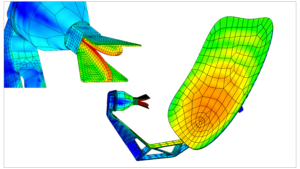
Platform effects – reflections from aircraft fuselages, satellite structures or ground vehicles – can significantly degrade array performance. ESTEAM models these interactions, allowing you to assess impact and adjust array placement or element patterns to maintain performance.
Standalone arrays use electronic beam steering. Array-fed reflectors combine phased array excitations with reflector geometry to achieve shaped and scanned beams. TICRA handles both.
TICRA's uncertainty quantification tools evaluate how deviations in element spacing, feed networks and excitation precision impact gain, patterns and beam steering.
This helps you set realistic design margins and identify which tolerances matter most.
Runtime depends on array size and frequency, but TICRA's efficient solvers analyse typical arrays of hundreds to thousands of elements in minutes.