
ESA and TICRA: shaping antenna simulation for today and tomorrow
For more than 50 years, we have worked together with the European Space Agency (ESA) to advance antenna modelling and electromagnetic simulation.
What began in the 1970s with the development of the GRASP software, now the industry standard for high-accuracy reflector analysis, has evolved into one of Europe’s longest-running technical collaborations. Our partnership has grown through mutual trust, complementary expertise, and a shared ambition to support Europe’s most demanding space missions.
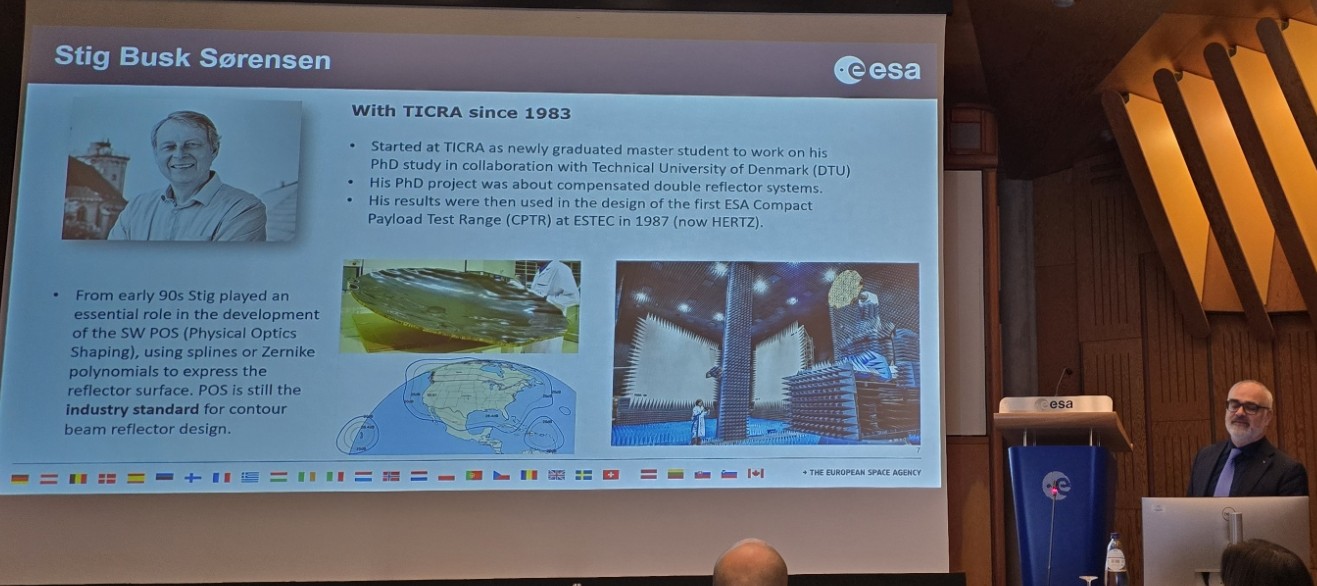
Stig Sørensen, Senior Software Engineer at TICRA, receiving the 1st ESA Career Award in Antennas from Giovanni Toso during the 42nd ESA Antenna Workshop.
Besides delivering efficient and high-fidelity electromagnetic modelling tools, TICRA has supported ESA in numerous in-depth antenna analyses and designs. Recent examples include our RF design of the Compact Antenna Test Range (CATR) for ESA’s HERTZ 2.0 facility and our extensive analysis of the mesh reflector antenna for the CIMR mission. Both projects required specialised numerical methods to capture the precise electromagnetic behaviour of the large reflectors involved.
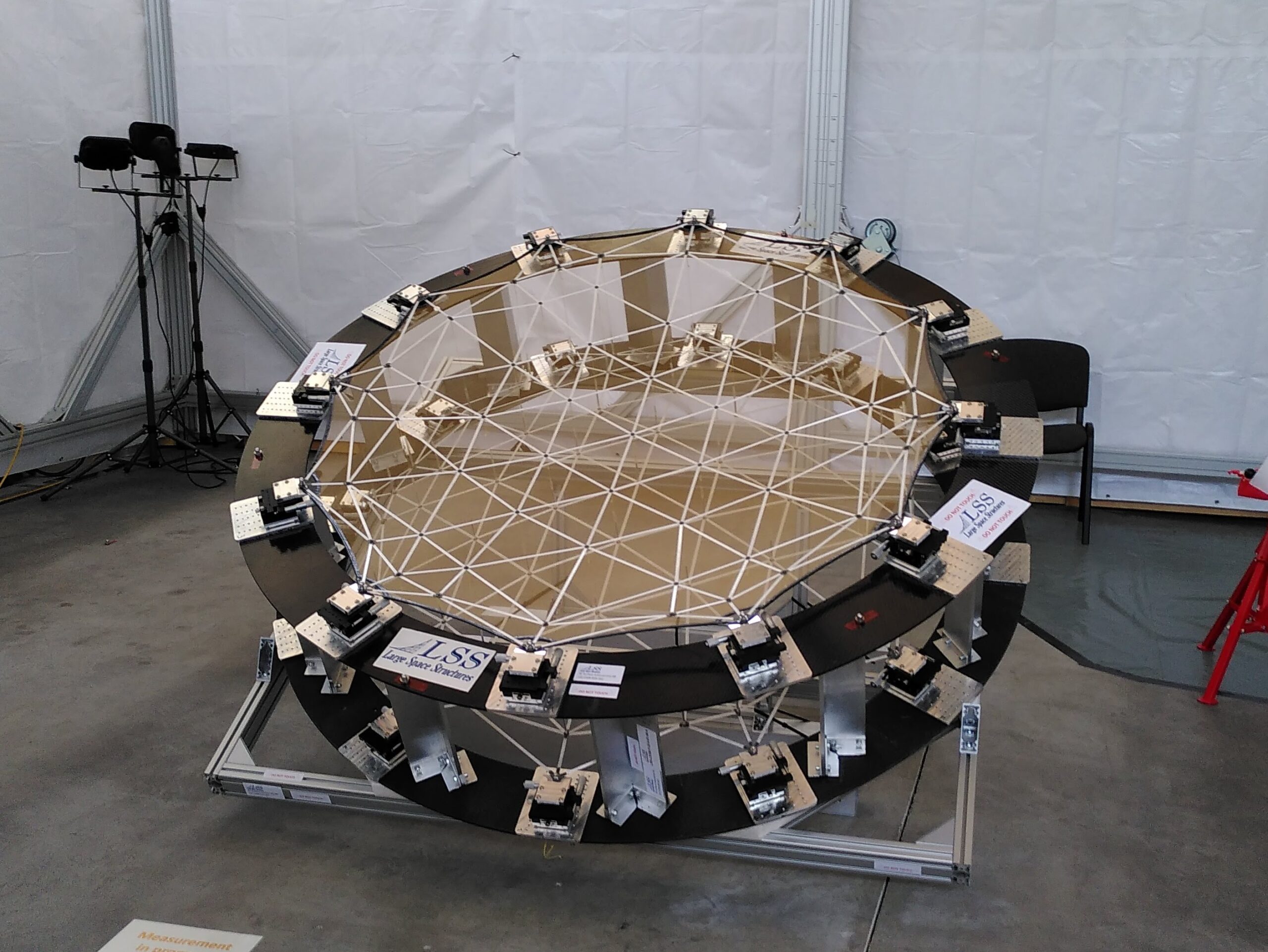
The 1.4 m CIMR breadboard reflector used in TICRA’s RF modelling and validation work for the Copernicus Imaging Microwave Radiometer mission.
A partnership grounded in technical excellence
Since the beginning, ESA and TICRA have worked together to address unsolved challenges in satellite antenna modelling through technical exchange and innovation. The collaboration has advanced both the efficiency and accuracy of electromagnetic simulation methods used for antenna and RF component design across a wide range of space missions.
Today, TICRA’s software tools are an integral part of ESA’s daily work. Engineers use them to analyse complex satellite-mounted antennas, evaluate RF performance across numerous frequency bands, validate system-level payload models, and support architectural decisions throughout mission lifecycles.
“TICRA’s software allows us to quickly simulate complex antenna configurations using metallic and dielectric materials with the precision we need,” says Giovanni Toso, Senior Member of ESA’s Antenna and Sub-Millimetre Wave Section. “Even when the electrical size poses a challenge, we can compute the solution in limited time and trust the result. And when we need technical advice, TICRA’s support is always timely and accurate.”
A platform for innovation and evolution
ESA’s input has played a central role in the development of nearly all TICRA software tools. According to Giovanni Toso, TICRA’s software continues to evolve in step with ESA’s forward-looking technical roadmap, adapting to new mission demands and emerging technology needs.
A recent example is ESA’s interest in specialised and highly accurate EM modelling software for quasi-periodic structures such as frequency-selective surfaces and reflectarrays, now available in the QUPES software, as well as in ultra-compact high-gain deployable reflectarray antennas for CubeSats.
Today, ESA is also supporting TICRA’s work on AI-assisted design. For instance, ongoing research on surrogate models explores how artificial intelligence can accelerate design cycles, enhance optimisation, and make simulation tools even more accessible for New Space companies and the next generation of antenna engineers.
A new chapter in phased-array antenna design
A major current focus of the collaboration is ARRAY, TICRA’s upcoming software for phased-array antenna design, scheduled for release in spring 2026.
ESA has been involved from the earliest stages, with Giovanni Toso acting as technical lead. A key requirement has been the ability to run fast, accurate full-wave analyses of electrically large phased arrays on standard computers, without relying on clusters. Speed, accuracy, and usability were key priorities.
ARRAY has been built to meet these needs, combining high simulation performance with a comprehensive optimisation framework for beamforming coefficients. These capabilities build on TICRA’s long-standing expertise in antenna optimisation and reflect a shared commitment to solving real-world challenges across ESA and the broader satellite industry.
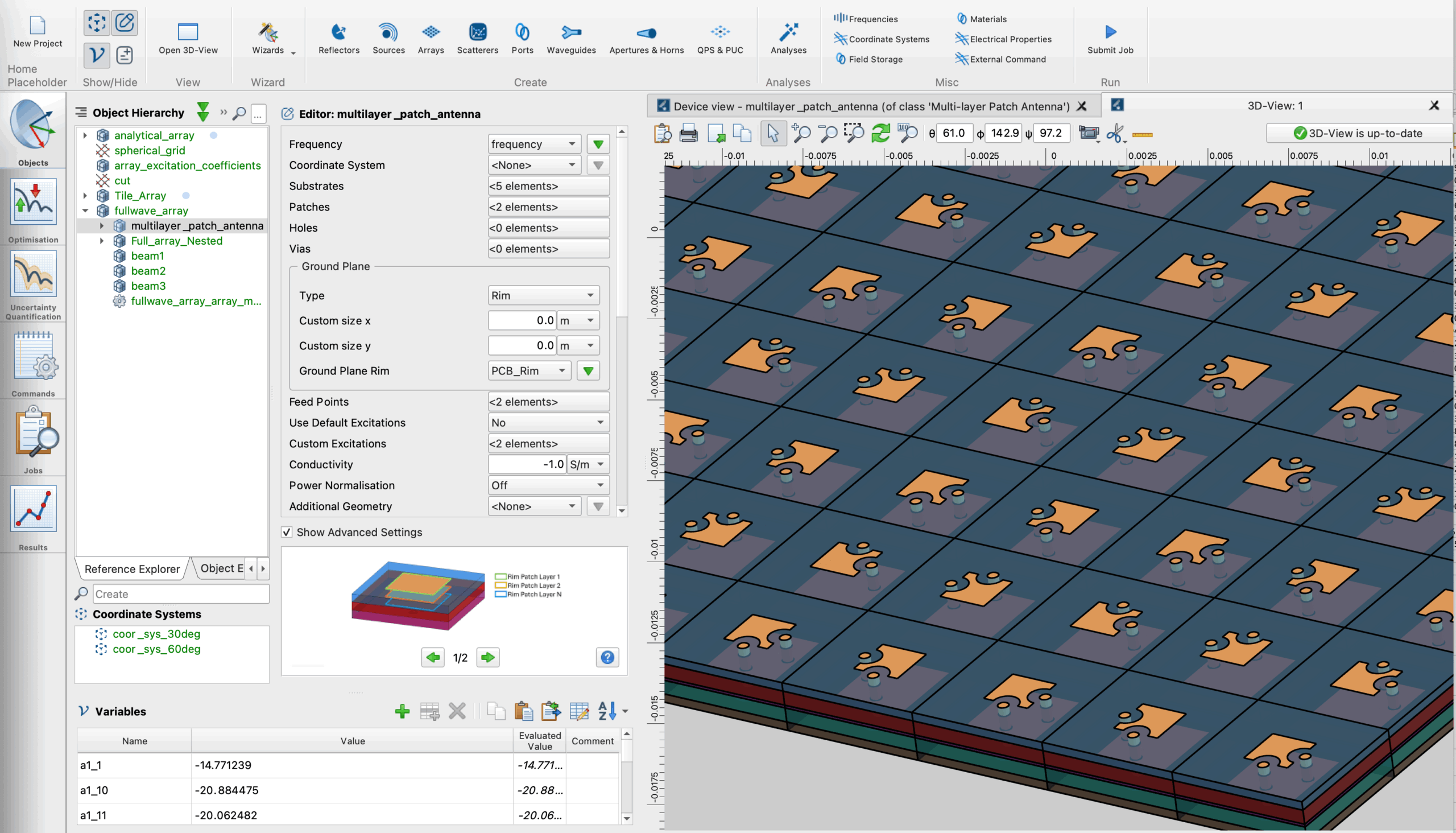
A planar full-wave patch array set up and visualised in TICRA Tools using the ARRAY Editor and MoM-based full-wave solver.
A long-term collaboration for the future
Our decades-long collaboration with ESA is marked by continuity, renewal, and a shared commitment to technical excellence. It is also a human story, shaped by generations of engineers who, through their expertise and dedication, have developed the tools and models that support Europe’s most advanced space missions.
“TICRA is one of the best European companies we collaborate with, and the deliverables from TICRA’s activities are always a success story,” says Giovanni Toso.
TICRA’s partnership with ESA continues to advance antenna simulation and electromagnetic modelling, supporting today’s missions while addressing the challenges of the future.
Explore more stories
If you want more stories like this, sign up to our newsletter or follow us on LinkedIn.